
AI agents that move driving business intent into controlled execution.
We design and build custom AI agents that understand objectives, retrieve enterprise context, select approved tools, coordinate multi-step workflows, interact with business systems, validate outcomes, and involve human teams when judgment or approval is required.

AI agents are designed for work that requires context, decisions, tools, and several connected steps.
A custom AI agent receives an objective, evaluates the available context, determines the next valid step, selects using approved tools, performs controlled actions, observes the result, and continues until the task is completed, paused for approval, or transferred to a human operator.
The task requires several connected decisions
The next step depends on retrieved information, system responses, document content, prior actions, exceptions, or intermediate business results.

Work spans multiple systems and information sources
Completion requires knowledge retrieval, database records, APIs, business applications, workflow engines, communication tools, and generated outputs.
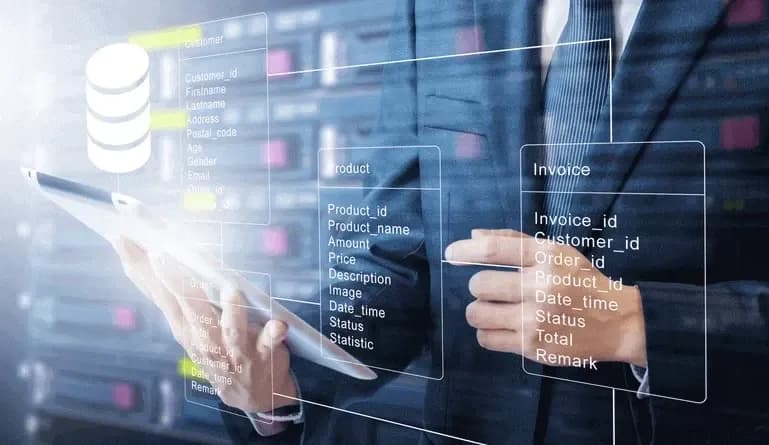


Human teams perform the same analytical sequence repeatedly
Specialists repeatedly gather context, compare evidence, determine next actions, update systems, produce documents, and route exceptions.
The process contains clear approval and escalation points
Routine steps can be delegated while sensitive, uncertain, financial, legal, or high-impact decisions remain under human control.
AI software turns model capability into a controlled business system.
It combines software engineering, enterprise data, business rules, models, integrations, security, evaluation, and human oversight to deliver intelligence inside a real product or operational workflow.
Solution Architecture & Levels

Specialized Task Agent
Completes one bounded task using a limited knowledge domain, a small approved toolset, explicit validation, and clear escalation rules.
Workflow AI Agent
Coordinates several systems, retrieves changing business context, selects the next approved action, manages workflow state, and requests approval when required.
Multi-Agent System
Uses specialized agents for research, analysis, planning, document production, validation, system actions, or quality review under one controlled orchestration layer.
The need usually appears through operational friction.
Repetitive knowledge work
Teams repeatedly search, classify, extract, summarize, draft, or review information.
Slow decisions & Fragmented information
Users depend on several systems, reports, teams, or manual analysis.
Existing products need embedded intelligence
Users need AI inside their current applications instead of a separate generic tool.
Standard AI Tool
Best for generic, low-risk tasks that do not require deep integration, custom workflows, or data ownership.
AI-Enabled Feature
Best when an existing product needs one focused capability such as extraction, generation, or prediction.
Custom AI Software
Best when the workflow, data, experience, controls, integrations, and operating model are strategic.

Build specialized agents around real business objectives, systems, tools, and operating rules.
We design AI agents for bounded operational work, including research, analysis, system actions, workflow coordination, customer operations, document processing, commercial activities, approvals, exception handling, and collaboration between specialized agent roles.

AI agents create value when they move real work forward with less delay, less coordination, and stronger control.
- Commercial LLMs
- Open-Source Models
- Python & AI Frameworks
- Vector Databases
- Oracle & SQL Databases
- Cloud AI Platforms
- MLOps & Observability
- Containers
From validated opportunity to operated production software.
We manage the complete delivery path covering discovery, technical validation, application engineering, production launch, evaluation, monitoring, documentation, handover, and continuous improvement.
Delivery & Engineering Process
Five stages move the agent advancing workflow discovery into controlled production operation.
Execution phase and delivery objective.
Define the task, value, and operating boundaries
Execution phase and delivery objective.
Specify the agent operating model
Execution phase and delivery objective.
Implement the agent, tools, and integrations
Execution phase and delivery objective.
Continuous Quality & Compliance
Enforce automated code quality checks, security vulnerability scanning, and ongoing operational review.
Launch is the beginning of operational responsibility.
AI Evaluation
Test datasets, quality criteria, task success, groundedness, and regressions.
Model & Prompt Versioning
Controlled changes, comparison, rollback, and release history.
Observability
Usage, latency, errors, token consumption, workflow failures, and system health.
Cost Control
Model routing, caching, usage limits, infrastructure, and cost per task.
Feedback & Improvement
Human corrections, user feedback, failure analysis, and optimization backlog.

Is your organization ready for Custom AI Agents?
AI Discovery
Use-case definition, feasibility, architecture direction, risk, and roadmap.
Proof of Concept
Focused technical validation using representative data and measurable quality criteria.
AI Product MVP
A working product for validating users, workflow fit, adoption, and operational value.
Production Platform
Complete engineering, integration, security, evaluation, deployment, and operations.
Product Enhancement
Add focused AI capabilities to an existing application, workflow, or enterprise platform.
The organization receives an operable system, not a disconnected prototype.
Deliverables are adjusted to the engagement scope, deployment model, security requirements, and ownership responsibilities.

Have a project idea for Custom AI Agents? Let's engineer it.
Tell us about the business problem, users, existing systems, required integrations, expected timeline, and desired outcome. We will help identify the right architecture, scope, and delivery path.